*SRV Hospitals Chembur Launches Advanced Robotic-Assisted Joint Replacement Centre*
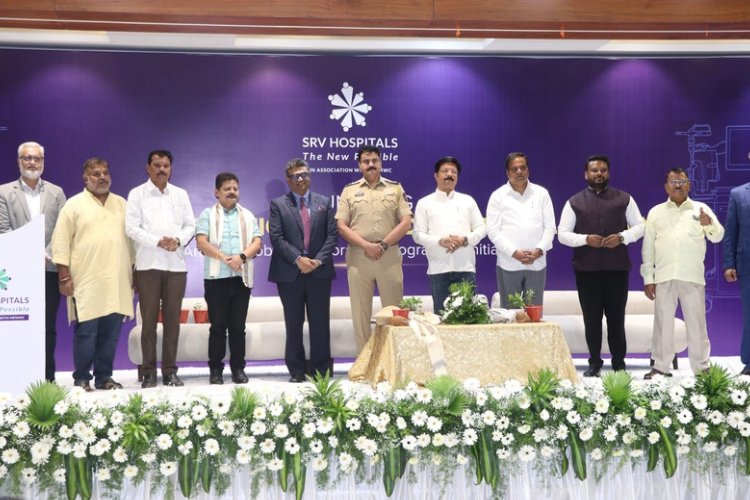
SRV Hospitals, Chembur, has launched its Advanced Robotic-Assisted Joint Replacement Centre of Excellence with the VELYS™️ Robotic-Assisted Solution, strengthening its joint replacement programme with advanced technology, a team of Doctors and structured rehabilitation under the broader SRV Mobility Restoration Programme.
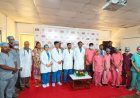
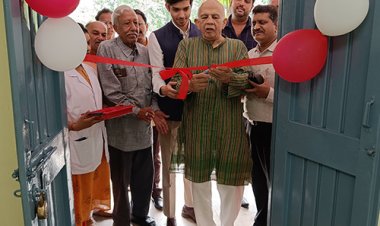
The centre was inaugurated in the presence of Hon’ble Shri Mangesh Kudalkar, Member of the Maharashtra Legislative Assembly, as Guest of Honour, along with medical professionals, civic representatives, community leaders and members of the SRV Hospitals leadership team.
*Hon’ble Shri Mangesh Kudalkar, Member of the Maharashtra Legislative Assembly, as Guest of Honour said,* "Mumbai's fast lifestyle, aging population, and rising arthritis cases have made joint pain and limited movement major health issues. The new robotic-assisted joint replacement facility is a big step toward offering accurate, personalized orthopedic care to the community. I believe that recovery doesn’t just stop at surgery; proper physiotherapy and rehab are crucial for helping patients move, feel confident, and regain independence. I congratulate SRV Hospitals for creating a complete program that combines medical care, robotic technology, and rehab to assist patients through their recovery."
For patients living with severe knee pain, the real concern is rarely the joint alone. It is the loss of movement that follows difficulty climbing stairs, reduced walking distance, dependence on others and the gradual withdrawal from everyday activities. Robotic-assisted joint replacement represents an important advancement in addressing that problem.
The VELYS™️ Robotic-Assisted Solution provides surgeons with real-time information during knee replacement and supports personalised surgical planning based on each patient’s anatomy. The system is CT-free, meaning an additional pre-operative CT scan is not required for surgical planning.
The technology is designed to support the surgeon’s decision-making during the procedure, while clinical judgement remains central to patient selection, treatment planning and the decision on whether robotic-assisted surgery is appropriate.
*Dr. Abhay Vispute, Founder-Director, SRV Hospitals, said:* “Robotics is an important advancement in joint replacement because it allows surgeons to plan and execute procedures with a high degree of personalisation and precision. But the real value of technology is seen in what it helps the patient regain.A successful joint replacement is not only about the procedure. It is about helping someone walk better, move with confidence and return to an independent life. That is the larger purpose behind this programme.”
SRV Hospitals has placed robotic-assisted joint replacement within its broader Mobility Restoration Programme, which includes preventive and conservative approaches, specialist orthopaedic evaluation, surgery where clinically indicated, structured rehabilitation and follow-up care. Patients undergoing treatment are supported by a multidisciplinary team including orthopaedic surgeons, anaesthetists, nurses, physiotherapists and rehabilitation professionals, with care extending from evaluation and treatment planning through recovery and post-discharge follow-up.
The hospital’s orthopaedic team includes experienced specialists with expertise across joint replacement, arthroscopy, sports medicine, shoulder care, foot and ankle, spine and rehabilitation.
*Dr. Shamim Khan, Zonal Head – SRV Hospitals, said* “Robotic technology gives our surgical teams an advanced tool for personalised joint replacement, but recovery does not end in the operation theatre. Rehabilitation, follow-up and the patient’s return to normal movement are equally important. By bringing these elements together within one programme, we are creating a more coordinated approach to joint care and mobility restoration.”
Arthritis, age-related degeneration, past injuries, or various medical issues can lead to joint pain that gradually impacts daily tasks like walking, ascending stairs, standing up from a chair, and maintaining independent mobility. While some individuals may find that medications, physical therapy, and other non-invasive treatments remain effective, others might explore joint replacement options if these methods no longer alleviate their discomfort, following a thorough clinical assessment.
The SRV Mobility Restoration Programme is designed to ensure that patients receive the right intervention at the right stage, with robotic-assisted joint replacement available where clinically appropriate.
 Disclaimer: Welthi.com does not guarantee any specific results as a result of the procedures mentioned here, and the results may vary from person to person.