The Numbers Don’t Lie: Did 2025 Deliver on You & Your Family’s Health Promises?
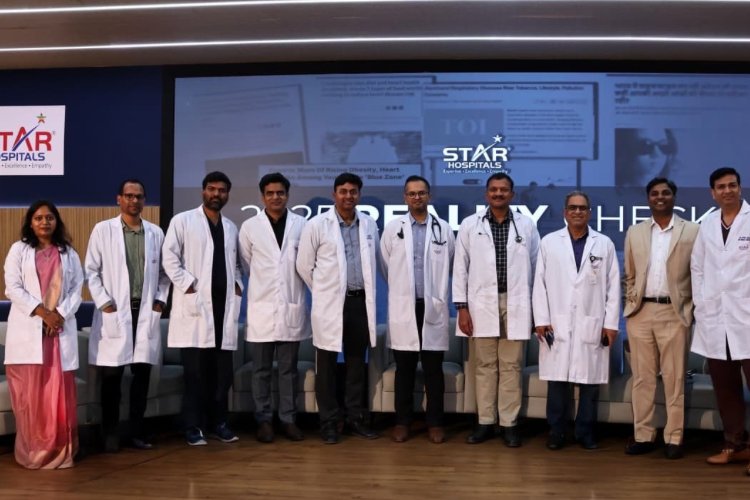
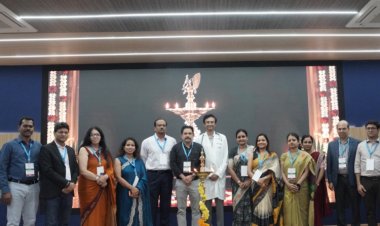
As the year draws to a close and New Year health resolutions once again take centre stage, STAR Hospitals, Nanakramguda, hosted a media-facing public-interest interaction titled “The 2025 Reality Check” to examine whether those promises translated into real health outcomes. The interaction was held on Tuesday, 23rd December 2025, at 11:30 AM at Pramana Hall, STAR Hospitals, Nanakramguda, in the presence of 20–25 members of the media and residents from nearby communities.
The press interaction was held in the presence of *Dr. Gopichand Mannam* , Managing Director, STAR Hospitals who outlined the hospital’s preventive healthcare vision and the larger responsibility of healthcare institutions beyond treatment. Addressing the media, Dr. Gopichand Mannam said, “Healthcare today cannot be limited to hospital walls. If we are serious about reducing disease burden, prevention and early detection must become part of everyday life, not just a response to illness.”
The session opened with a welcome address and a short contextual audio-visual presentation that highlighted a growing concern in Indian healthcare, the gap between health awareness and health action. Addressing the gathering, the hospital leadership reiterated STAR Hospitals’ preventive healthcare philosophy, noting that while access to treatment has improved, avoidable illness continues to rise. “We treat illness every day, but our real responsibility is to stop people from reaching the hospital for conditions that could have been prevented,” the leadership said.
*The core of the event was the “2025:* The Reality Check” panel discussion, moderated by *Dr. Sainath Bhethanabhotla* , Senior Consultant & Head – Medical Oncology, who guided the conversation using real OPD experiences from the last 355 days (January 1 to December 22, 2025). Setting the tone, Dr. Sainath observed, “Every January we hear health resolutions, but what we saw in our OPDs through 2025 tells a very different story. Many patients came to us with conditions that could have been prevented or detected much earlier. The ‘2025 Reality Check’ is about confronting this gap honestly.”
The panel brought together experts across specialties, including *Dr. Bharat Kumar Nara* (Surgical Gastroenterology), *Dr. Y. Rami Reddy* (Gastroenterology), *Dr. Gandhe Sridhar* (Nephrology & Transplant), *Dr. Srinivasa Reddy G* (Clinical & Transplant Hepatology), *Dr. Sreekanth Yerram* (Interventional Cardiology), *Dr. Rohini Kasturi* (Endocrinology), and *Dr. B. Santhosh Kumar* (Neurology). Across departments, clinicians highlighted a disturbing trend, young patients presenting with advanced stages of preventable diseases.
Speaking on cardiovascular health, *Dr. Sreekanth Yerram* underlined the seriousness of the issue, saying, “What is most alarming is not just the number of heart cases we treated, but the age of the patients. People in their 30s and even late 20s are reaching us with advanced heart disease, often without ever monitoring basic health parameters like blood pressure or cholesterol.”
From a metabolic health perspective, *Dr. Rohini Kasturi* noted that lifestyle-driven disorders were no longer confined to older age groups. “Diabetes and obesity are no longer conditions of old age. In 2025, we saw young professionals and even students struggling with disorders that are largely preventable if addressed early,” she said, emphasising the urgent need for earlier screening and education.
*Statistics*
Data and clinical insights shared during the interaction revealed a worrying shift in disease patterns across age groups in 2025, highlighting a widening gap between health awareness and preventive action.
Doctors at STAR Hospitals reported a sharp rise in early-onset lifestyle-related diseases, *with 20–30% of patients* now developing serious conditions in their *20s and 30s* , compared to the earlier trend of onset after 50 years. Cardiologists noted that 1 in 4 Indians is now experiencing heart attacks below the *age of 40,* with increasing cases reported even in the *20–35 age group* . Neurologists highlighted that nearly 1 in 3 stroke cases now occurs in young adults, driven largely by uncontrolled hypertension, smoking, alcohol consumption, and sedentary lifestyles.
Endocrinology data showed that Type 2 diabetes is increasingly affecting young adults, *with nearly 40%* of individuals unaware they have diabetes and *over 50%* failing to control it, often leading to silent complications such as infertility, kidney disease, and cardiovascular issues. Nephrologists reported a growing number of young patients progressing to advanced kidney disease, primarily due to undiagnosed or poorly controlled diabetes and hypertension.
Hepatology and gastroenterology specialists pointed to a surge in fatty liver disease, colorectal disorders, and gut-related conditions among younger populations, linked to high-calorie diets, processed foods, alcohol intake, and irregular lifestyles. Alarmingly, *30–40%* of colorectal cancer cases in India are now reported in individuals below 50 years of age.
Oncology experts also flagged an increase in young-onset cancers, including breast, ovarian, and gastrointestinal malignancies, reinforcing that cancer risk is no longer age-bound and is strongly influenced by genetics, lifestyle, and environmental factors.
Collectively, the data underscored a *10–15% overall increase* in preventable chronic diseases across cardiac, metabolic, liver, kidney, neurological, and gastrointestinal systems—many of which could have been delayed or avoided through early screening, lifestyle modification, and timely medical intervention.
Highlighting the human cost, the leadership reflected that when one individual falls ill, the emotional and financial burden is borne by the entire family, often unnecessarily when early detection could have altered outcomes. This formed the basis for the hospital’s forward-looking announcement.
*Concluding the discussion* , STAR Hospitals formally announced 2026 as the “Year of Healing”, committing to shift focus from emergency-driven care to prevention, early diagnosis, and sustained community awareness. “By declaring 2026 as the ‘Year of Healing,’ STAR Hospitals is committing to a future where awareness, early screening, and prevention reduce avoidable suffering for families,” the leadership stated.
The interaction concluded with an open media Q&A, encouraging candid dialogue between doctors, journalists, and community members, followed by lunch.
“Prevention is not optional; it is responsible citizenship,” the hospital emphasised. “If 2026 is truly the Year of Healing, fewer people should reach hospitals because disease was identified early.”
 Disclaimer: Welthi.com does not guarantee any specific results as a result of the procedures mentioned here, and the results may vary from person to person.