
Why others have more friends and some have less?
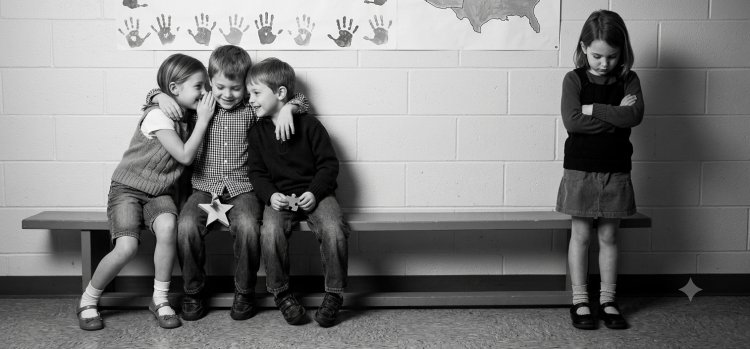
We all want friends and they make life worth living. However, when we start to think that others have more friends than us it make us feel really sad. Some people go ahead and make new friends to compete with their peers, while others are simply depressed.
Research proves that most of us think this way. The thought that others have more friends occur when one moves into a new neighbourhood, school or job. We all tend to think other peoples lives are more happenning than us and this definitely lowers down our own happiness quotient.
No man is an island and everyone seeks companionship. Since it is natural. Studies reveal that social isolation can actually affect our immune system and cardiovascular health and this often leads to premature deaths. A research was conducted by the University of British Columbia (UBC) in collaboration with Harvard Business School and Medical School to study why believing other people have more friends can affect one's health. The findings was published in the journal Personality and Social Psychology Bulletin.
A survey was taken of the students and the results showed that 48% believed that their pals have more friends than them while 31% thought the opposite. The researchers also studied how this belief affected one's thought pattern. This led to a surprising revelation that the subjects (here students) who believed that their friends have a big social circle than them had lower sense of belonging and well-being.
However, those who thought that their friends were 'Moderately more socially connected' fared better than those who thought that their friends had more friends.
Such people were ready to make newer friends but those who harboured a false perception and gave up the attempt of widening their social circle.
Frances Chen, assistant professor in the Department of Psychology at UBC explains the reason why such misperceptions take place by saying, "Since social activities, like eating or studying with others, tend to happen in cafes and libraries where they are easily seen, students might overestimate how much their peers are socializing because they don't see them eating and studying alone" Such misperceptions happen when people discuss their social activities disproportionately and hide their solitary experiences.
Dr Minhajzafar Nasirabadi, consultant psychiatrist and professor and head dept of psychiatry, DR.VRK Womens Medical College Secretary, Hyderabad Psychiatric Society made some observations on this social misperceptions harboured by many people:
 Most of the people are constantly hooked on to social media and they tend to check each others profile and compare. This leads to fasle interpretation since people tend to put forward their good or healthy side on the social media. This leads to peer pressure and creates inferiority complex in people. As a result people try to mimic or overdo when they find that their friends are socializing more than them. It is a vicious cycle and this incessant competition leads to anxiety disorders and depression in people who can be labelled as social media addicts. People hardly do any physical activities but lead a more sedentary life, giving rise to physical disorders.
Mature people don't care for such things, they believe to each his own. While some people compare their own peer groups with others. What we need to understand that in real physical world we can interact with limited number of people who can be mutually emotionally beneficial to each other. If there are too many people you can't satisfy each of them and at the end you will be unhappy.
Some people keep on thinking that their peers have a better social life and this makes them anxious or depressed. So when people need solace or support they don't have physical friends, thus they have these thoughts.
Man is a social animal and it is their nature to seek validation from others. Children ask approval from their parents and teachers. Once they grow older they seek validation from their friends, more than their parents. This is because everyone want to be a part of a group that is happenning.
Nowadays with virtual world even if someone is moving into a new locality only the physical world around him changes.The virtual world acts as buffer to some people as they are in constant touch with their peer.Some may feel lonely or depressed as they have moved out while their friends are enjoying each others company.These feelings can be overcome by making new friends in their new neighbourhood, workplace or at school or college, while being in touch with their family (physically) and previous friends virtually.
Till certain age children learn from their parents and teachers more. After that they start learning from their peers. Since, friends become very important, some children tend to get anxious,nervous,depressed and irritable when they find that their pals have more friends.Such chidren need reassurance and support from teachers and parents and sometimes professional help is also required.
Many people who are introvert also feel bad or depressed when they find that their close pals have a huge social circle.This can be due to internal depression or arising from the feeling that their friends give them less time than what he or she gives them.
A sense of belongingness gives us a deep satisfaction and affect the way we perceive life. While our close relationships keep us grounded and makes us happy. Interactions with those who we don't know also give us a feeling that we are a part of a greater community. Since our peers influence our lives so much, such feeling of isolation is natural. But you can make up for this void by making new friends and discovering a whole new life yourself.
 Disclaimer: Welthi.com does not guarantee any specific results as a result of the procedures mentioned here, and the results may vary from person to person.